

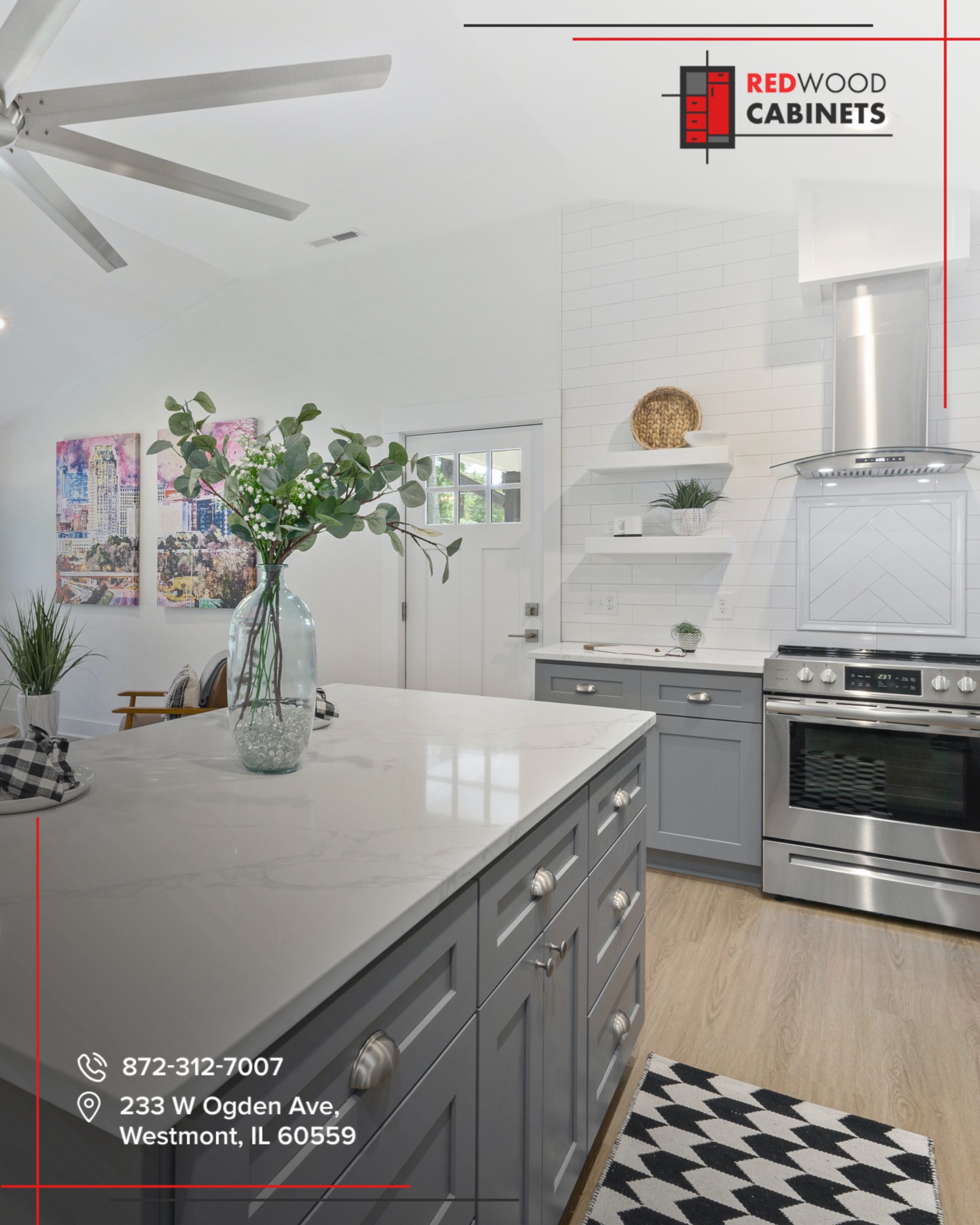
The best cabinet material for humid kitchens is plywood, especially when it is paired with a durable finish, quality edge sealing, and proper installation. Solid wood can also perform well, but it expands and contracts more with moisture. MDF and particleboard are usually more vulnerable when water or steam reaches exposed edges.
At Redwood Cabinets of Chicago, we look at humidity as a real kitchen issue, not just a technical detail. Steam from dishwashers, boiling pots, sink splashes, poor ventilation, and seasonal moisture can affect cabinet doors, boxes, shelves, and finishes. As a cabinet company in Gurnee, IL, we often explain that the strongest kitchen cabinet is not only about the door style. It is about what is behind the door.

What cabinet material handles humidity best?
Plywood usually handles humidity best because it is made from layered wood veneers that create strength and stability. It is less likely to swell quickly than particleboard when exposed to moisture.
Plywood is not waterproof, but it is more forgiving in real kitchens. If steam rises from a dishwasher or a small sink leak happens, plywood generally gives homeowners a better chance of avoiding serious cabinet damage.
Birch plywood is often a practical choice because it offers strength, a smooth surface, and good long-term performance. It works well for cabinet boxes, shelving, and parts that need stability.
| Cabinet Material | Humidity Performance | Best Use | Main Concern |
|---|---|---|---|
| Plywood | Very good | Cabinet boxes and shelves | Still needs sealed edges |
| Birch | Good to very good | Doors, panels, cabinet parts | Finish quality matters |
| Solid wood | Good, but moves with humidity | Doors and visible details | Can expand or contract |
| MDF | Moderate | Painted doors in controlled spaces | Swells if water reaches core |
| Particleboard | Low to moderate | Budget cabinets | Weak around moisture |
Is plywood better than solid wood for humid kitchens?
Yes, plywood is often better than solid wood for cabinet boxes in humid kitchens because it is more dimensionally stable. Solid wood is beautiful, but it naturally expands and contracts when humidity changes.
This matters around sinks, dishwashers, and cooking zones. Cabinet boxes need to stay square. Shelves need to stay flat. Door gaps need to remain even. If the material moves too much, the kitchen can start to look misaligned.
Solid wood can still be useful for cabinet doors and decorative details, but it should be finished properly. A strong finish helps slow moisture absorption and protects the surface from daily kitchen conditions.
For anyone looking for a cabinet company in Gurnee, IL, this is a good question to ask early: “What are the cabinet boxes made of?” The answer matters more than many homeowners realize.
Why do cabinets swell near sinks and dishwashers?
Cabinets swell near sinks and dishwashers because these areas get repeated moisture exposure. Even small amounts of water can cause problems if the cabinet material is weak or the edges are not protected.
A sink base cabinet is one of the hardest-working cabinets in the kitchen. It deals with plumbing, cleaning supplies, trash bags, water drips, and sometimes hidden leaks. The dishwasher area is another risk zone because heat and steam escape during cycles.
Common humidity trouble spots include:
- Sink base cabinets
- Dishwasher side panels
- Cabinet doors near the range
- Trash pullout areas
- Toe kicks near wet floors
- Cabinet ends beside exterior walls
- Upper cabinets above coffee makers or kettles
At Redwood Cabinets of Chicago, we always pay close attention to those zones because moisture damage usually starts quietly. By the time a cabinet looks swollen, the material has often been absorbing moisture for a while.
Which finish protects cabinets from humidity?
A durable painted, stained, or sealed finish helps protect cabinets from humidity, but it must cover the surface evenly. Exposed edges, weak seams, and unfinished undersides are where moisture can sneak in.
A cabinet finish does two jobs. It creates the visible color and style, but it also helps protect the material underneath. Matte, satin, painted, stained, and wood-look finishes can all work if the finish system is strong.
| Finish Detail | Why It Matters in Humidity |
|---|---|
| Sealed edges | Reduces moisture absorption |
| Durable topcoat | Protects against cleaning and steam |
| Proper curing | Helps finish harden correctly |
| Quality paint or stain | Reduces peeling and softening |
| Gentle cleaning routine | Prevents finish breakdown |
A beautiful cabinet finish can fail early if the material underneath is weak or if the finish is thin around edges. That is why finish and construction should be discussed together.
Are painted cabinets bad for humid kitchens?
No, painted cabinets are not bad for humid kitchens if the material and finish quality are strong. The problem is not paint itself. The problem is poor prep, weak materials, and exposed edges.
Painted cabinets can look clean and modern, especially in white, cream, taupe, green, navy, and warm gray. But painted finishes may show chips or swelling more clearly than stained wood if the cabinet material underneath reacts to moisture.
For humid kitchens, we usually prefer stable construction, careful finishing, and good ventilation. A painted plywood or birch-based cabinet can perform well when installed correctly.
How much do humidity-resistant cabinets cost?
Humidity-resistant cabinet choices can start around $300 per linear foot for basic cabinetry, but upgraded plywood construction, birch components, durable finishes, soft-close hardware, installation, and trim can raise the total cost. The final price depends on the kitchen size and the level of construction.
A lower-cost cabinet may look similar from the outside, but the inside construction can be very different. Two white Shaker doors may look alike in photos, yet one may have stronger plywood construction and better moisture resistance.
If you are comparing a cabinet company in Gurnee, IL, ask whether the estimate includes box material, finish type, installation, hardware, trim, and countertop coordination. The cheapest cabinet quote may not be the best value in a humid kitchen.
How do countertops affect cabinet durability?
Countertops affect cabinet durability because heavy stone surfaces need stable, level support. Granite, quartz, marble, and quartzite all require cabinets that are installed correctly before fabrication and installation.
A weak or uneven cabinet base can create problems for stone countertops. Granite and quartzite are heavy natural stones. Quartz is engineered but still needs proper support. Marble is beautiful, but it also needs a stable base and careful use.
| Countertop Material | Heat Resistance | Stain Resistance | Cabinet Planning Note |
|---|---|---|---|
| Granite | High | Good when sealed | Needs level, strong support |
| Quartz | Moderate | Very good | Works well with modern layouts |
| Marble | Good | Moderate | Needs careful maintenance |
| Quartzite | High | Good when sealed | Needs precise support |
Redwood Cabinets of Chicago plans cabinets with countertop fabrication in mind. The cabinet installation should be solid before the stone template happens, especially around sinks, islands, and overhangs.
How long does a cabinet project take?
A cabinet project usually takes about 3 to 5 weeks after design approval, depending on materials, finish selection, scheduling, and installation details. Projects with more detailed layouts or specialty finishes can take longer.
The timeline should also account for countertop and backsplash work. Cabinets usually come first. Then granite, quartz, or marble countertops are templated, fabricated, and installed. Backsplashes are usually installed after the countertops.
A reliable cabinet company in Gurnee, IL should explain this sequence clearly. If cabinets are not installed properly, the countertop and backsplash stages can become harder than they need to be.
How can homeowners prevent moisture damage?
The best way to prevent moisture damage is to combine strong materials with good daily habits. Even high-quality cabinets can suffer if leaks, steam, and standing water are ignored.
Simple prevention works. Run the exhaust fan. Wipe water near the sink. Open the dishwasher slightly after the heat cycle if steam is heavy. Check under the sink for slow leaks. Keep cabinet interiors dry.
Practical moisture habits include:
- Wipe sink splashes quickly.
- Use ventilation while cooking.
- Check plumbing under the sink monthly.
- Do not let wet towels hang over cabinet doors.
- Avoid harsh cleaners that weaken finishes.
- Dry cabinet fronts near the dishwasher.
- Use trays under cleaning products.
These habits are small, but they protect the cabinet material, finish, hinges, and drawer systems over time.
Are humid kitchens a reason to avoid wood cabinets?
No, humid kitchens are not a reason to avoid wood cabinets completely. They are a reason to choose better construction, better finishes, and better installation.
Wood-based cabinets can perform very well when they are made with strong materials and protected correctly. The real risk is choosing cabinets based only on color or door style without asking what the box, shelves, and finish are made from.
In Gurnee, IL homes, kitchens can experience seasonal humidity changes, winter dryness, cooking steam, and daily moisture around appliances. A good cabinet plan should account for all of that before installation begins.
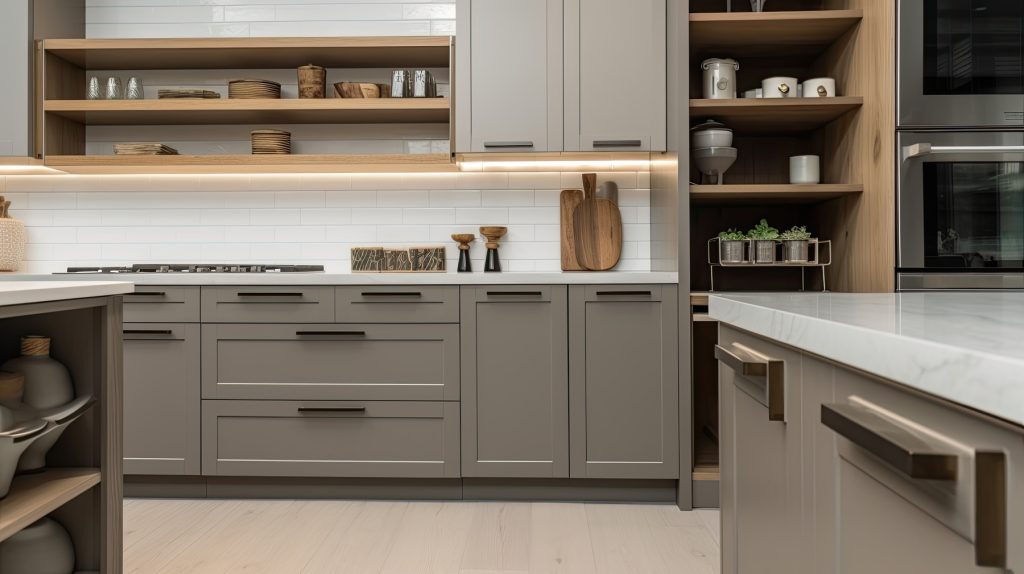
FAQ: Cabinet materials for humid kitchens
What cabinet material is best for humidity?
Plywood is usually the best choice for humid kitchens because it is strong and more stable than particleboard.
Is MDF bad in humid kitchens?
MDF can work in controlled areas, but it can swell if water reaches the core. It needs a strong finish and protected edges.
Are birch cabinets good for kitchens?
Yes. Birch is a practical cabinet material because it is smooth, stable, and works well with painted or stained finishes.
How much do kitchen cabinets start at?
Basic cabinetry can start around $300 per linear foot. Final cost depends on materials, layout, finish, hardware, and installation.
How long does cabinet installation take?
Many cabinet projects take about 3 to 5 weeks after approval, depending on materials, scheduling, installation, countertops, and backsplash work.
What should I ask a cabinet company in Gurnee, IL before choosing cabinets?
Ask about plywood construction, birch components, finish durability, edge sealing, installation, hardware, and countertop coordination.
Do stone countertops require stronger cabinets?
Yes. Granite, quartz, marble, and quartzite need cabinets that are level, stable, and properly installed before countertop fabrication.
Where can homeowners near Gurnee, IL get help choosing cabinets for humid kitchens?
Redwood Cabinets of Chicago is located in the Chicago, IL area and serves nearby communities, including Gurnee, IL. We help homeowners compare plywood, birch, cabinet finishes, installation details, and countertop materials such as granite, quartz, marble, and quartzite. If you need a cabinet company in Gurnee, IL, our team can help you choose cabinets that hold up better around steam, moisture, daily cooking, and long-term kitchen use.
Contact Redwood Cabinets of Chicago today to learn more or schedule your visit.
Phone: 872-312-7007
Address: 233 W Ogden Ave, Westmont, IL 60559